

This article is about the requirements for creating an evacuation and rescue plan, which is required by law in Croatia.
Any case of the emergency came without any sort of warning. Many situations often need your attention and for that you suppose to tackle that situation with full enthusiasm.
Emergencies rarely come with a warning. A fire alarm, sudden earthquake, gas leak, or technical failure can turn a normal working day into a serious safety risk within seconds.
In such moments, panic and confusion are often more dangerous than the event itself. This is why a well-prepared evacuation and rescue plan is not just a legal requirement, it is a vital safety tool that protects lives, property, and business continuity.
Across Europe and other international markets, employers are increasingly expected to follow strict occupational health and safety standards. An emergency evacuation plan helps ensure that employees, visitors, and contractors know exactly what to do, where to go, and who is responsible when an emergency occurs.
In this guide, we explain what an evacuation and rescue plan is, what the law requires, and how to create a practical, compliant plan that works in real-life situations.
Under Croatian occupational health and safety legislation, specifically Article 55 of the Occupational Safety Act, all employers are legally required to prepare an evacuation and rescue plan . This obligation includes:
Failure to comply with these requirements can result in financial penalties. Legal entities that do not prepare an evacuation plan or fail to train employees may face significant fines. Responsible individuals and sole traders can also be fined, with higher penalties applied in cases of repeated violations.
While this regulation is based on Croatian law, similar requirements exist across the European Union and other regions. Internationally, these documents are often referred to as:
Adapting your plan to meet both local regulations and international best practices is essential, especially for companies working with foreign partners or operating in multiple countries.
An evacuation and rescue plan is a formal document that outlines all procedures, responsibilities, and safety measures to be followed during an emergency. It includes both written instructions and visual layouts that guide people safely out of a building and ensure help for those who cannot evacuate on their own.
The main purpose of the plan is to:
A well-designed plan considers different types of emergencies and prepares the workplace to respond effectively under pressure.
A quality evacuation plan ensures that:
For example, if a fire breaks out on the fourth floor of an office building, a clear plan allows occupants to exit safely without overcrowding stairways or choosing dangerous routes. It also ensures that rescue teams know where hazardous materials or disabled persons may be located.
In theory, employers are allowed to prepare an evacuation and rescue plan themselves. There are no strict formal requirements stating that only licensed professionals may create the document.
However, in practice, creating a high-quality and compliant plan requires specialized knowledge , including:
Because of this complexity, most employers choose to work with authorized safety experts. Professional support ensures that the plan meets legal requirements, reflects real risks, and can be effectively implemented during emergencies.
An emergency event is any sudden situation caused by natural forces, technical failures, or human actions that may endanger life, health, or property. Common examples include:
These events often involve immediate and serious risks that require fast decision-making.
Evacuation means the organized and planned movement of people away from a dangerous area to a safe location. It applies to employees, visitors, contractors, and any other persons present in the workplace at the time of the emergency.
Rescue refers to coordinated actions taken to assist individuals who cannot evacuate independently. This includes:
Evacuation and rescue always go hand in hand and must be planned together.
The written section of the evacuation plan is the foundation of the entire document. It explains procedures, responsibilities, and safety measures in detail.
This includes a clear description of:
Description of Work Activities and Processes
An overview of:
This helps identify potential risks.
Types of Possible Emergency Situations
The plan should list all realistic emergency scenarios based on internal and external factors.
Critical Areas and High-Risk Zones
Identification of areas most at risk during emergencies, such as:
Evacuation Zones
The building should be divided into logical evacuation zones, especially where large numbers of people are present.
Evacuation Routes and Assembly Points
Clear instructions for:
Evacuation Routes and Exit Requirements
Analysis of:
Hazardous Substances List
If hazardous materials are used, the plan must include:
Fire Protection and Technical Systems
Description of systems such as:
General Safety Measures
Preventive measures that support safe evacuation and rescue.
Alert and Warning Procedures
How people will be warned in an emergency, such as alarms or announcements.
External Communication Procedures
Steps for notification:
Responsible Persons and Duties
A list of appointed individuals responsible for evacuation and rescue, along with their roles.
Employee Instructions
Clear, simple instructions on how employees and visitors should behave during emergencies.
Evacuation Drills and Training Plan
Schedule for regular evacuation drills and training sessions.
First Aid and Rescue Equipment
List of:
The visual section of the plan is just as important as the written content. These are the framed diagrams commonly displayed in hotels, schools, hospitals, and office buildings.
Site Layout Overview
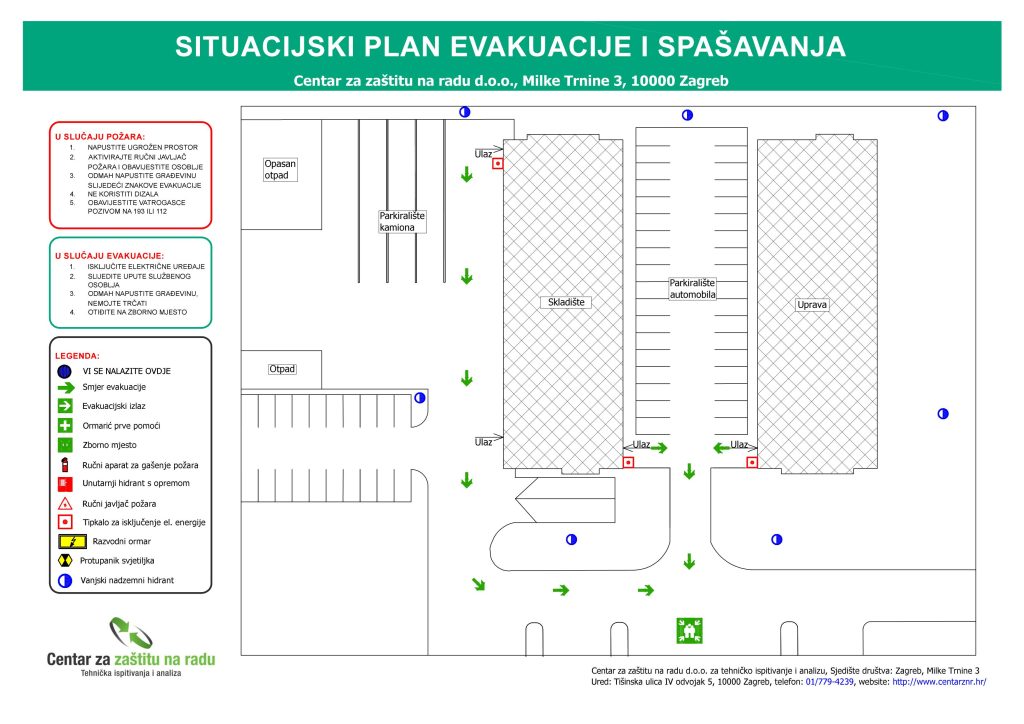
A situational view showing the building in relation to surrounding structures.
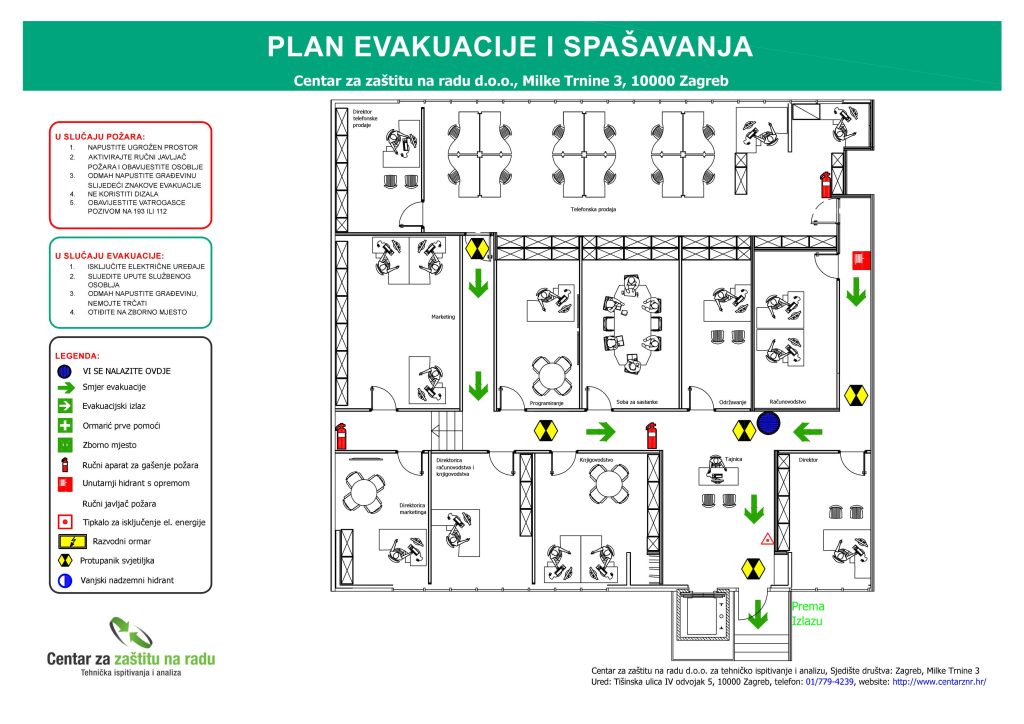
Floor Plans for All Levels
Clear floor layouts displaying:
Evacuation Exits
Marked emergency exits and alternative escape routes.
Safety Equipment Locations
Visual marking of:
Internal and External Evacuation Routes
Routes leading from workspaces to exits and from exits to assembly points.
Assembly Points
Clearly marked safe gathering areas after evacuation.
Hazardous Areas
Locations of flammable, explosive, toxic, or other dangerous substances.
– example of a floor plan layout (Figure 1)
– example of a situational layout of the evacuation and rescue plan (Figure 2)
An evacuation and rescue plan is more than a legal formality. It is a practical safety tool that saves lives. When properly designed, communicated, and practiced, it reduces confusion, speeds up response times, and helps emergency services do their job more effectively.
For employers, it also demonstrates responsibility, compliance, and care for employee well-being factors that are increasingly important in international business environments.
Creating an effective evacuation and rescue plan requires careful planning, expert knowledge, and regular updates. Whether you operate a small office, industrial facility, healthcare center, or educational institution, a clear emergency plan is essential for safety and compliance.
By investing in a professional, well-structured evacuation plan, you not only meet legal requirements but also create a safer, more prepared workplace for everyone.
If you need a professionally prepared evacuation and rescue plan, feel free to contact us — we are at your disposal.


